Saturday, January 11, 2020

Ready for spring: an out of season shirt plus pattern storage idea

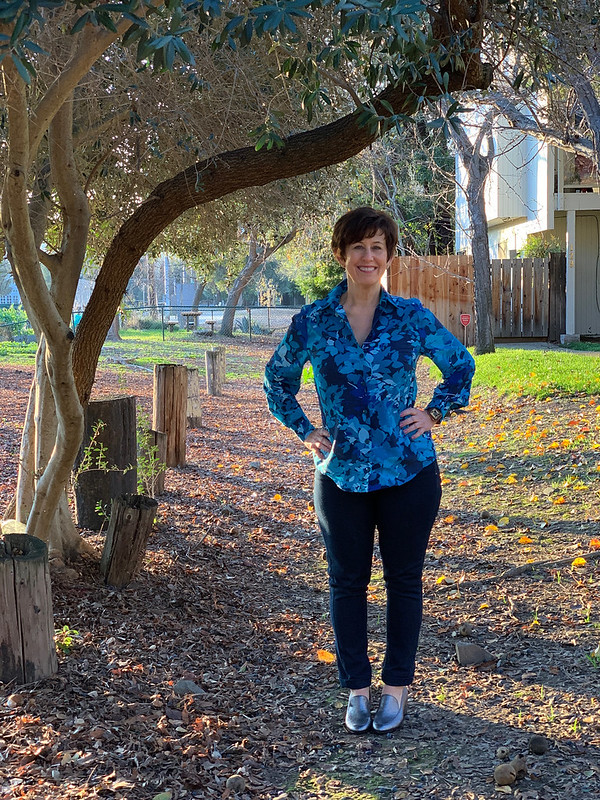
Here's something I sewed up on a rainy day in December, and the whole time I thought "well this will go in the closet until spring arrives". However I had the chance to take some outdoor pictures last week on a beautiful sunny day.

Blue voile shirt 3

Although I should have known better than to stand under an olive tree - these trees are common around here and while they give a nice mediterranean touch to the landscape there are a lot of fallen olives to step on and make a mess on the bottom of your shoes. Everything is so green right now and we Californians have to enjoy it while it lasts. I have so much sympathy for everyone in Australia, the fires are devastating as we here well know. But the scope of their situation is mind boggling and I hope it settles down soon.

Back to the mundane details of my new shirt. This is from Burda Magazine, January 2019 #109 which I made last year in March. That version was also a print so the design lines don't show there either. That was in a wool challis which I paired with an ultra suede skirt - a successful sewing of two pieces that I wear often. Keep reading to see the interesting pattern pieces that make up this shirt.

The fabric is from Mood, I ordered it last summer and it's a silk and cotton voile. 60" wide, I ordered 1.5 yards which is enough for me to make a shirt. I posted this recently on Instagram asking if it looked too "geriatric palm beach style" but it got a lot of positive feedback. Not sure why I saw it like that, maybe working up close with the leafy print it seems a bit much. However now that it's finished I do love it. The colors are among my favorites.

blue voile shirt 8


Blue voile shirt with jacket1

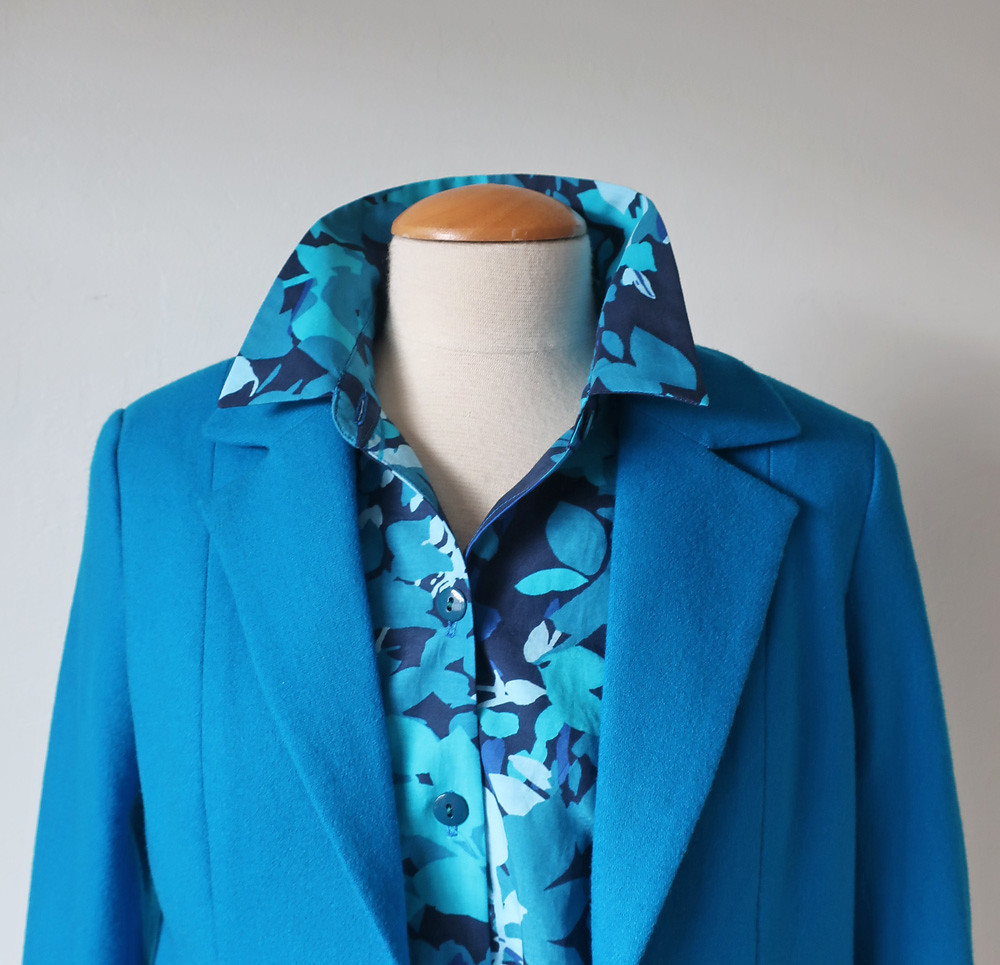
Plus it goes so well with my blue wool blazer that I posted about previously. Please ignore my pocket flap which is annoyingly out of place in that picture. Also it's interesting how the iPhone reacts to the light, photos taken seconds apart can have such a different tone.

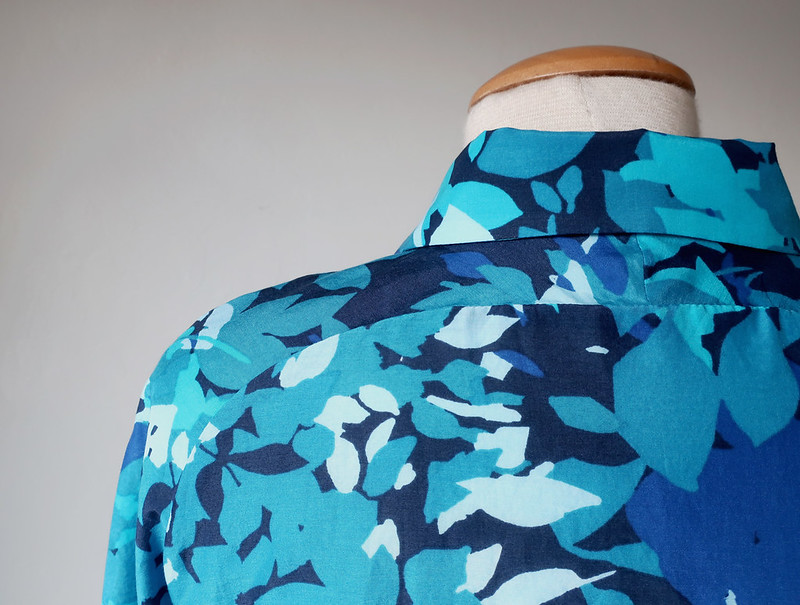
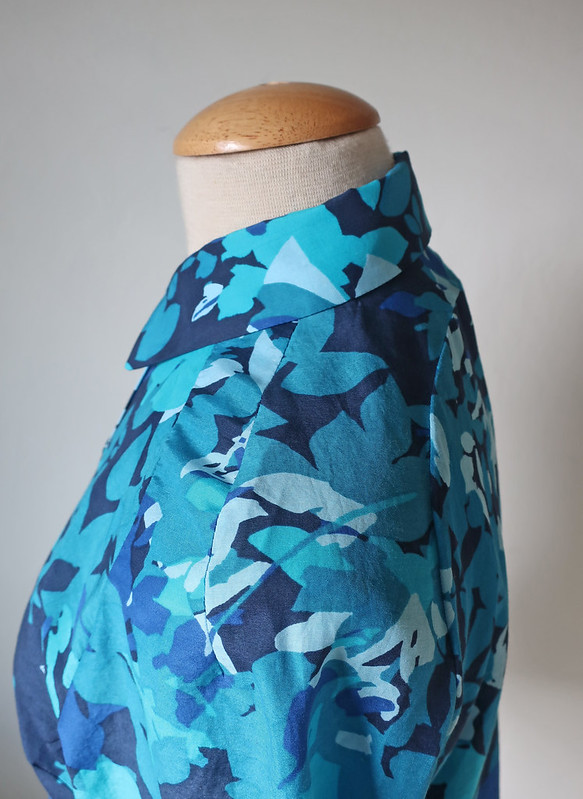
I thought it would be interesting to show you the pattern pieces for this shirt. It's a raglan sleeve where the yoke is incorporated into the top of the sleeve, with a dart at the shoulder. The front has a facing instead of a button band (facing not pictured, also the collar and stand as they are just like any other shirt.)

Burda raglan sleeve shirt pattern pieces

But I think this is a clever design and results in a nicely fitting shirt. Plus it is super quick to sew. I don't think this is the last time I will use this pattern.
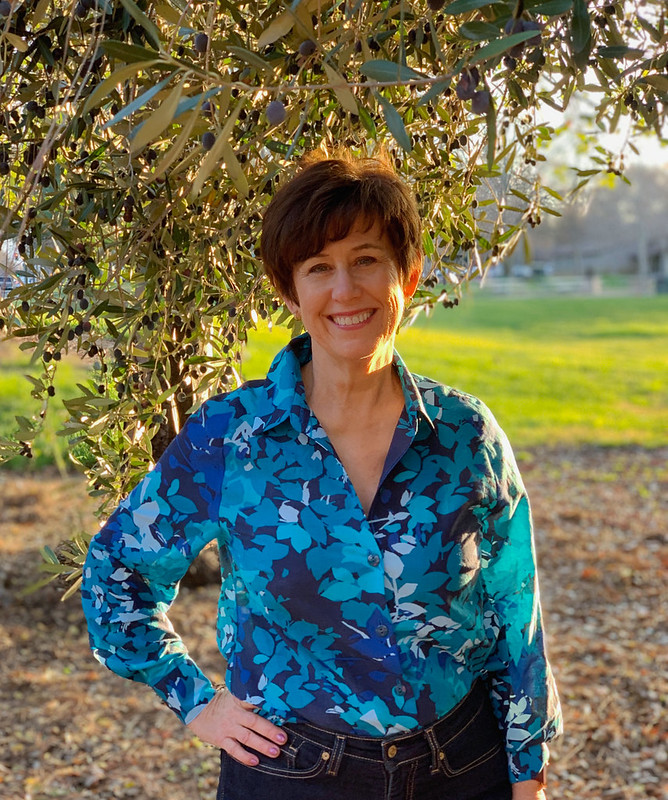
blue voile shirt 7


Blue voile shirt 5 Blue voile shirt 1

Yep those colors definitely make me smile. I think turquoise is my basic black, if that makes any sense 😄.

Since I've been sewing so many Burda magazine patterns I have plenty of tracings like those shown above.  I find you have to be systematic with labeling - nothing worse than looking for a pattern piece for what seems like hours. Sometimes I've search for days and finally the missing item turns up when I stop looking for it, although that applies to any pattern, not just Burda.

For my envelope patterns such as Vogue, McCalls etc, I put the pattern pieces and instructions in file folders, and label the folder with the pattern brand, number and then a note for whatever garment I first used the pattern for. Example: "Simplicity 2339 blue silk charmeuse". It's far easier to remember the specific garment than the pattern. By the way - when I open an envelope pattern I look through the instruction sheets and get rid of unnecessary ones (typically in other languages) and just use those sheets for scrap paper note writing. Anything to make the file folder less bulky.  I'm lucky to have a big file drawer cabinet where I store the file folders in hanging files but it's getting stuffed and so probably time to cull a few of the ones I'm never going to make again.

This label system also applies well to Burda since they have issue and pattern numbers. However with Burda all I have to file is the traced sheets and it seemed like it would take up too much space to make a file folder for each pattern I traced. So one day I thought about putting them in binders, and this is what I came up with.

The clear page covers hold two patterns, and I keep all the pattern pieces together with a paper clip, then put a post-it on the bundle with the magazine year/month and the pattern number PLUS my description of whatever I made first with that pattern. It's quite easy to flip through and find a pattern.

Burda pattern storage binder

I have about 10 patterns in the binder now and will put the rest of my traced patterns in there. I think having a few of these binders on the shelf is a lot easier than an individual folder for each pattern. In fact I could see having a different binder for each category once I get a sizable quantity of patterns traced.

So that's the scintillating scoop on my pattern storage, ha ha. Onward to the next project. I had some lovely burgundy corduroy and had the idea to make some trouser style pants with slant pockets and a front pleat. Which may or may not be a good idea, pleated pants can be friend or foe, a lot depends on shape and style.

Anyway, here's a peek at the pants.
Cord pants patttern and skirt

I'm not 100% happy with them despite the fact that they fit very nicely above the knee. Which is usually the trouble zone but they are a winner there - however the legs are more tapered than I would like. I think if they were straight legs or wide they would look better with the pleated top. So I am playing around with the seam allowance on the legs and seeing if I can adjust a bit. I have a lot of the corduroy remaining so I think I'll make that skirt pictured to the right. And if I could order those long legs and the boots that would be nice also :).


Blue voile shirt 4

Enough hanging around - I think happy hour was calling my name right then.

Tomorrow I have a full day of classes at Hello Stitch, it's our Intro to Sewing class and in the first session I explain how to decode all that info on the pattern envelope and discuss fabric choice, pattern markings and all the other stuff that is so helpful to know when you begin making your own clothes. I really enjoy it plus I bring a bunch of things I've made to compare with the pattern envelope. I think when you start sewing that's one of the trickiest things to master, matching or visualizing the fabric with the pattern. It's fun for me and the most common comment is "I would never have imagined that garment based on the picture on the pattern!" Which once you get going is the fun part of sewing and making clothes that are your own choices.


Blue voile shirt with jacket2

Next up, maybe those corduroy pants and a new to me shirt pattern (Vogue 9029) with a good result but some interesting observations.

Happy Sewing,
Beth

Today's garden photo, reaching among my flower photos for something blue and came across this one. It's Vinca minor which is a nice ground cover and I should get outside and take some cuttings to make more. Or stay inside and sew :)
IMG_0166

Thursday, January 9, 2020

Bye 2019 and a quick review before starting 2020 sewing

Is it too late to do a review of 2019? I actually started the blog in Feb of 2010 so the ten year mark is coming up soon, and I plan to take a retrospective look then. But for now let's take a look at my sewing in 2019. Which is the year I officially became a Burda magazine fanatic.

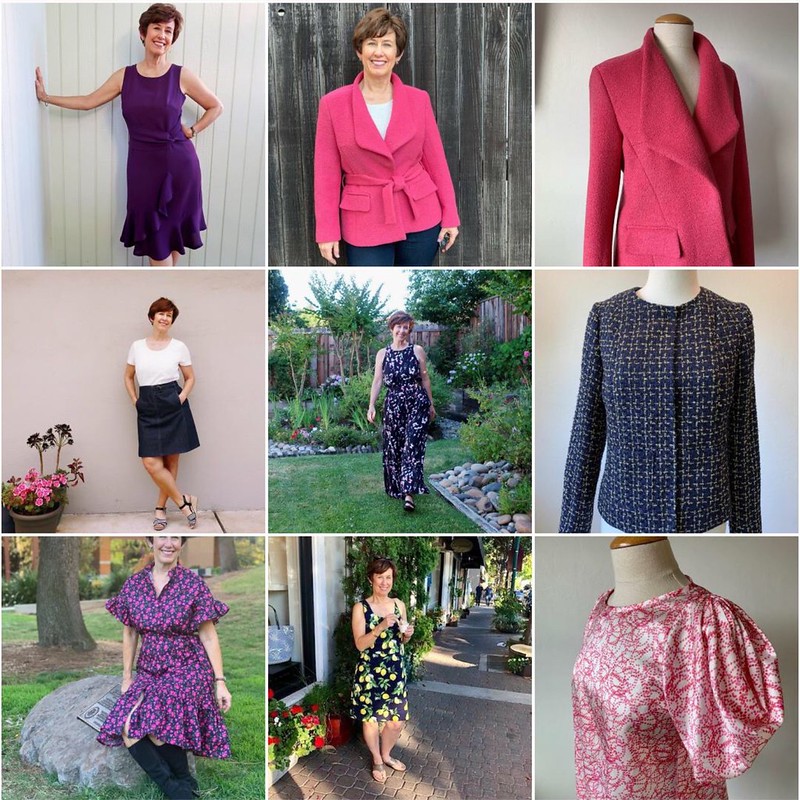
Here's my Instagram Top Nine for 2019.

Best nine 2019


My Burda fandom is certainly evidenced by that pink jacket and my smile. Here's the blog post on that project which is Burdastyle Oct. 2018, pattern 108.


Although I did start off the year with a pair of Ash jeans and since then I've made a few more pairs. I think the most challenging part about sewing jeans is finding the exact right fabric. But once you get a style and fit you like they go together rather quickly.

What did I sew in 2019?  I went thought my blog posts and counted up the garments and they break down like this:
3     Blazer - Jackets    
9     Dresses
4     Shirts   (I consider these as button front shirts with sleeves)
5     Tops     (woven or knit)
1     Jumpsuit
2     Skirts
1     Pants
2     Jeans

When I added up those numbers I thought what??? It seemed like I sewed so many more items and in actuality I did. Throughout the year I made a lot of things that were samples connected to teaching my classes at Hello Stitch. If we used a new pattern then I made a sample to familiarize myself with it, plus to have as an example in the studio.

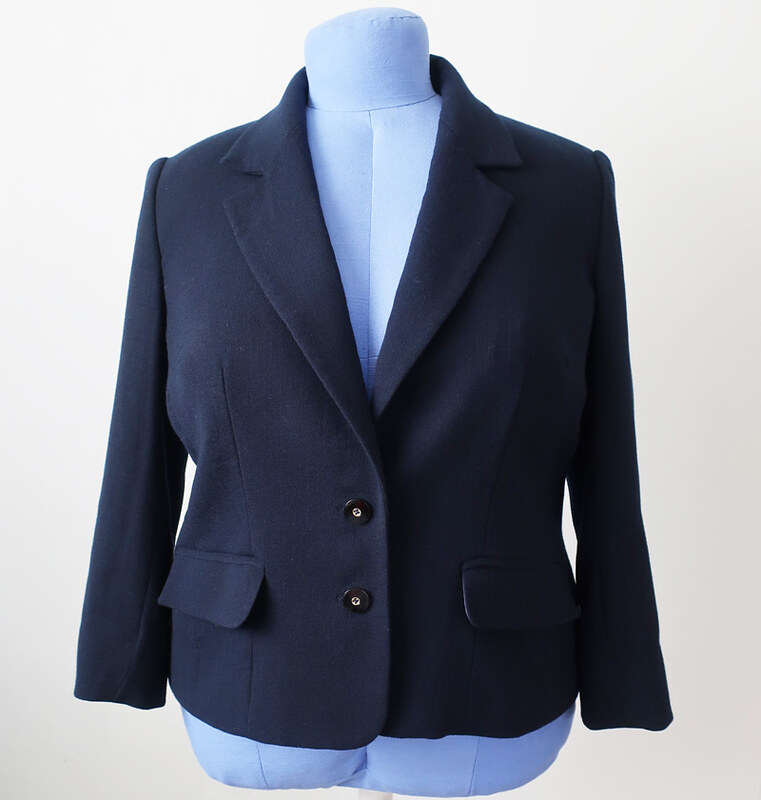
I sewed a few things for other people, including a blazer jacket for my friend Heather using a beautiful wool from Britex. I actually made two jackets, this navy blue one was the first and it was kind of a wearable test version which turned out to be supremely wearable. I also discussed this pattern McCalls 6172 and other blazer patterns on a recent blog post.


Navy blazer

Since I rarely sew with any plan and am not missing anything in my wardrobe, I just sew what grabs my interest. Lately I have been given a LOT of different fabrics, and as I have mentioned previously the fun of turning something that was free into something very wearable is a fun challenge. Currently I have been given a very unusual hot pink wool sweater knit which I'm thinking could be a 60's style dress. But as I said, I'll just sew where my mood takes me.

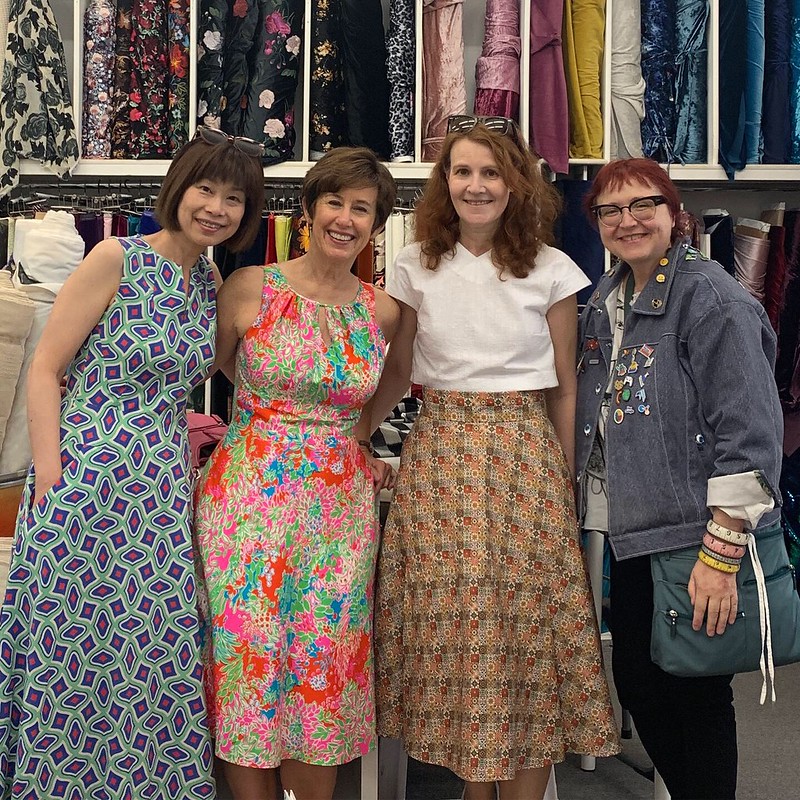
This year also brought me the sewing meet-up of dreams as I got to meet my far away friends Carolyn and Yoshimi.  Carolyn lives in Perth, Australia, writes the blog Handmade by Carolyn and is a sewing and knitting wizard plus appreciates a sewing and/or fabric challenge. Yoshimi is from Tokyo and sews meticulous garments plus knits beautifully as well. Time for my frequent lament of I wish I could knit but I'm not going to start now!  It seemed like magic to be together in person after so many years of online connection and we had a fun shopping excursion plus dinner together. Plus further bonded over our shared love for Vogue designer patterns, particularly the Donna Karan and DKNYpatterns.

Yoshimi, me, Carolyn and Shams. Everyone wearing handmade garments and now I just noticed Shams' bracelets and want one.

intl sewing meetup


It was a great year of teaching classes at Hello Stitch Studio. They opened their doors for business in 2017 and gradually the classes are getting more and more busy - to the point that they fill up quite soon after being listed which is very rewarding. Plus I see so many people come back for different classes, I know they want to learn to make garments but I think they have also enjoyed their sewing day with me 😊. We're always trying to think of new classes to offer, particularly in that intermediate skill level so if you have a suggestion please let me know.
Of course one of my favorites is the Jacket Making weekend workshop which last year was held on a ridiculously hot September weekend but they all powered through with the steaming and pressing to make beautiful blazers.


Jacket class

My next session of this class at the end of this month is full, if you are interested let the studio know as they will schedule another session based on requests.  For sure we will do it again in the fall.

A quick mention about patterns. For the most part I've sewn with Vogue patterns plus a few from New Look, McCalls, Simplicity. Once I started reading a lot of blogs I was so intrigued by Burda, as they seemed to have a lot of styles I liked, so I bought a few issues and also someone gave me a a few older ones. I purchased a few PDF patterns off their US website (which has gone through a weird transition and isn't very useful right now) but they were all good. Particularly the Burda Plus patterns, they seem to have a good variety of styles, with real fashion details and interesting design lines. Of course not everything in the plus section is super interesting, they have their fair share of shapeless silhouettes but they have the same thing in the 34-42 sizes as well so I don't think it's inherently a problem due to the size range. In any event, once I started subscribing I just used the magazines more and more, as it is so convenient to just flick through the magazine or the Russian website which collates all the Tech drawings onto one page, and find what I'm in the mood to make, be it a dress, or a shirt or skirt. Whatever. In fact when each issue comes I usually see more things I want to make then time allows. Granted you have to trace the patterns and believe me - it gets a lot easier after you have done it for a while. Now I can trace a complex pattern in about 15 minutes.
The second feature that actually makes them easy (at least for me) to fit is that you trace the size, no seam allowances, then do you adjustments for fit, and lastly add the seam allowances. It does turn out to be easier to check a pattern with no seam allowances for flat pattern measurement and not alway have to deduct the seam allowance on each seam.  So the work of tracing etc. is a happy trade-off for never every printing and taping PDF's together.

So that's my little editorial about Burda - yeah - I'm a convert so perhaps a bit over-enthusiastic.
Here's the link to my blog post on this dress which is Burda April 2019 # 117.

purple dress 17 sq

That's a wrap for 2019. We had all kinds of sunshine yesterday so I took pictures of several finished items and hope to post those soon.

Happy 2020 Sewing 🎉
Beth

For today's photo, the current state of my garden is fallen leaves and sprouting weeds, so here's something from a few months ago. Puts me in a color block sewing mood.

pink white petunia

Sunday, December 29, 2019

One more finished item, Saler Blazer from Pauline Alice patterns

Here's my not quite last post of 2019. In the interest of blogging just about everything I have made this year today's item is a wool blazer I started in September as an example for my Jacket Tailoring class, back when the temps around here were nearing 100℉ ! Needless to say that I set it aside for a good couple of months until the weather was more conducive. By the way, as I write there is one spot open for my Intro to Tailoring weekend workshop at Hello Stitch which is the first weekend in Feb.

I plan to do another post this week, reviewing my sewing year and a few ideas for the next, and perhaps even sneaking in some photos of things that never made it to the blog. But for today, a wool blazer sewn completely with fabrics given to me by the lovely ladies at Hello Stitch. Can you believe these were leftovers after they had a fabric swap? ( I can believe there were no takers for the lining :)
Blue jacket 1

And yes, I'm wearing mostly black - quite unusual for me. I put that black cashmere turtleneck on my list for Santa as I thought it would be very useful with so many bright color jackets that I have made. Although I did sew a shirt that goes with this jacket - a bit more springlike so it will have to wait.

Let's start with some insides. If you read my post earlier this month comparing blazer jacket patterns you have seen this type of jacket collar, which has a stand that gives it some structure. I'm not entirely sold on it, although I have made this pattern three times now so I guess it doesn't bother me.
Sales jackets: the first (with lots of sewing details) and the second.

Blue jacket collar stand

That's the stage when the jacket is finished, shoulder pads are in and it is just waiting for the lining, which I sew in by hand.

And here's the finished jacket looking a strange color as it was a rainy day and I think I lightened up the photo which was very shadowy. But you can see the details.

Blue jacket 3

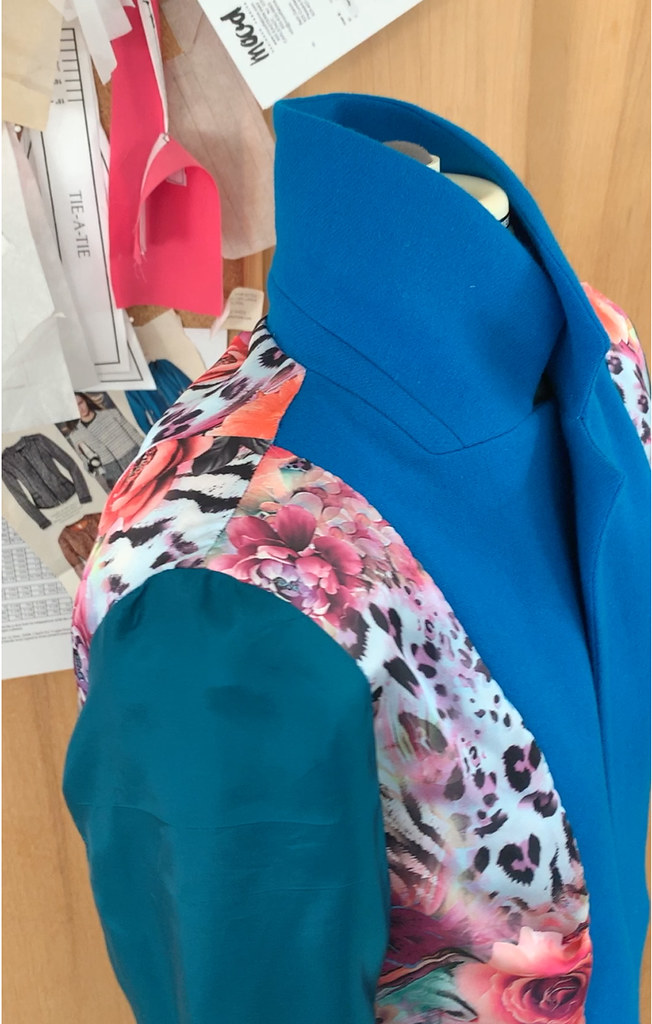
Blue jacket show lining

See that lining is a bit wild, at least for me. But a very nice fabric, and as I mentioned above, free! I like solid linings in coordinating or matching colors. I guess I'm just a bit boring that way - but remember - no beige in my wardrobe so I guess I can be a bit stringent in my lining choices. Here's the lining sewn in, for the sleeves I rummaged in the linings scraps box to find something solid that was reasonably coordinating, as I really didn't want that leopard/floral/weirdness peeking out at the wrist.

blue jacket lining view on form

Let's talk buttons and thread. I am not particularly fussy when it comes to sewing garments, I generally use thread in black, white, navy, red, or grey if any of those are in the same color family for the seams and other sewing. The stitches do not show and it's so much easier to see what you are doing if the thread is a slight contrast to the fabric. So I probably sewed this with grey thread, but that does leave the buttonholes as a conundrum.

Blue jacket test buttonholes

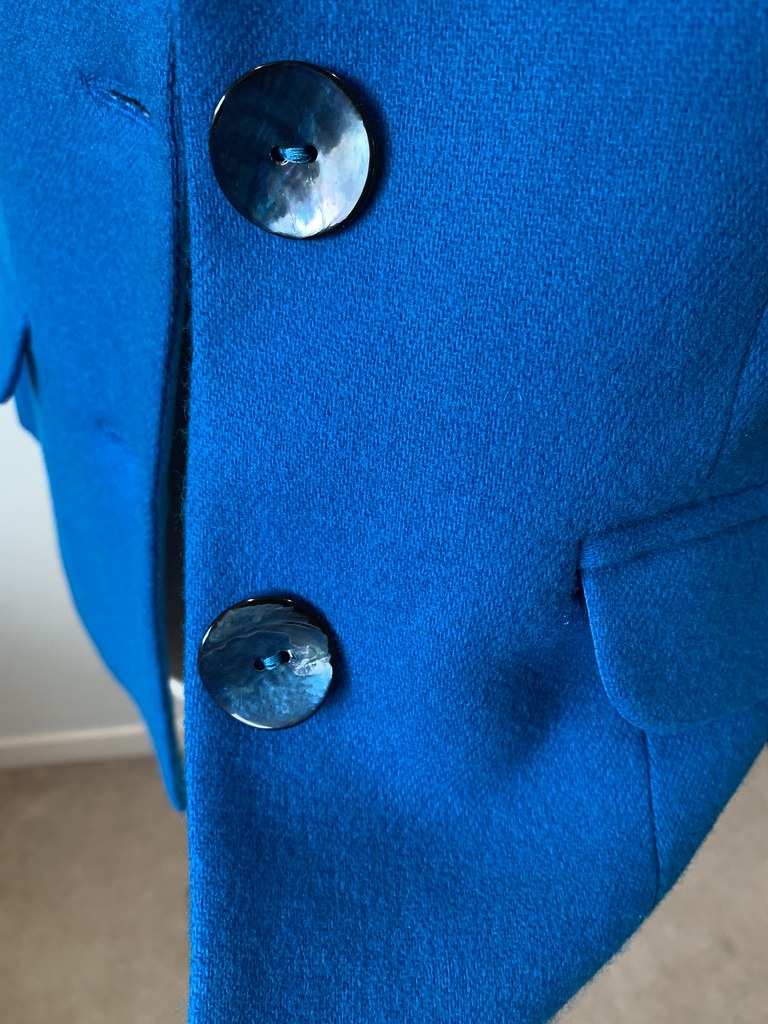
I always made sample buttonholes to see how the fabric behaves and to see the thread color.  I made these using my old Singer machine, as it can make larger buttonholes than the attachment with my newer Singer. Plus the quality is better, you can go around the buttonhole several times, changing the width of the stitch which gives it a more three dimensional look. On those above I probably just went around once to check thread color. I thought the royal blue (top one) looked better than the turquoise which was actually closer to the fabric color.  I bought these gorgeous shell buttons at Britex in San Francisco. My two favorite buttons are leather knot buttons or shell buttons and I mostly use those on tailored jackets if I can.

Blue jacket buttons


Blue jacket unbuttoned

I think the sleeves are a bit wrinkly which is due to the soft fabric. I have kind of a wrinkle mania and could have minimized that by applying fusible interfacing to the whole jacket but that seemed a bit much, also it makes it more stiff and I wanted to keep it a soft and easy jacket (but with crisp lapels :) Why do wrinkles bug me so much? not sure - everyone has their preference and mine is for smooth or even intentionally textured fabrics, but the random wrinkles of wear just annoy me. Psychological analysis for another day, ha ha.
A few more details.  I like to use lining inside the pocket flap, reduces bulk.

Blue jacket pocket flap

A look at the little angle at the hem seam allowance that allows the hem to turn up and fit inside smoothly.

blue jacket hem interfacing

A tiny piece of blue silk to wrap around the edge of the facing near the front hem.

Blue jacket lining front edge

Blue jacket lapel closeup

blue jacket sleeve back

Blue jacket buttoned

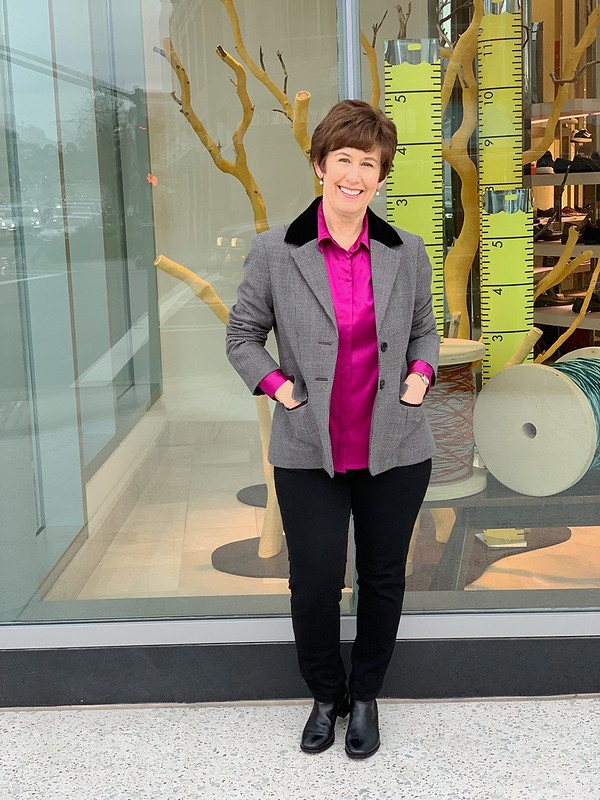
Here's a look at at shirt I just made, as I noticed this fabric in my stash seemed to go well with the jacket. Let me know if you think these two items can be worn together. I think with dark denim jeans although it is pretty colorful! I got that cotton/silk voile from Mood back in August, just because I loved the print and those cotton/silk voiles are dreamy to sew and to wear.

Blue jacket with cotton blouse

The different color in every image is a bit bothersome, I would say the outdoor photos are the most accurate color of this jacket.

So that's the latest on this blazer. I think I'm ready to put this pattern way back in the file drawer, and try out something new. The lovely owners at Hello Stitch gave me a gift card for Mood so there will be more wonderful fabrics in the near future.
Today I've been sewing on a pair of wool pants, something I haven't made in a while but I did say on Instagram when I posted a peek of this blue jacket that I had fabric leftover and was prepared to go full pantsuit. Now I'm not so sure but in any case I have just made a very wearable pair in black/grey houndstooth as a trial run.

Up next, a roundup of 2019, and a look ahead. We have some great classes scheduled at Hello Stitch, a lot of them are booking up so if you are interested register soon! You can sign up for their newsletter to get details on future classes.

And now I have to dash, my resolution is to organize my fabric stash and sewing room. Stay tuned to see if that happens😉

Happy Sewing, Beth

blue jacket2

Saturday, December 21, 2019

A festive new dress 🎄 Burda 09-2019-104

Happy Holidays! It's that time of year when I'm filled with gratitude and love for the sewing community. Thank you all for sharing your creations, providing inspiration, ideas, advice, humor, personal stories and friendship. The sewing internet is vast and I will never catch up with everything yet every day I discover someone new to me who is doing beautiful and interesting things.

This year has been so great, I've had the opportunity to meet some of my far away sewing friends in person and to meet many new stitchers in my classes. Next year will likely have some new adventures that I can't even imagine right now.

And so as usual I've made a new dress in a festive color. Plus gone a bit silly with adding the holiday border and turned it into my Christmas greeting to you. Keep reading for all the sewing and pattern details.


Holiday red dress with garland

The pattern is Burda Magazine 104-September-2019. This dress is a ponte knit with a subtle print - probably not visible in the photo above but it shows more in the following images. I'm not a fan of ponte - they sometimes seem a bit clammy so as I was sewing this I thought "well I will finish it as I like the color but I'm probably not going to wear it". Famous last words, right? As I can get over the slight poly feel since the color is so nice and it holds it's shape with not a wrinkle in sight.

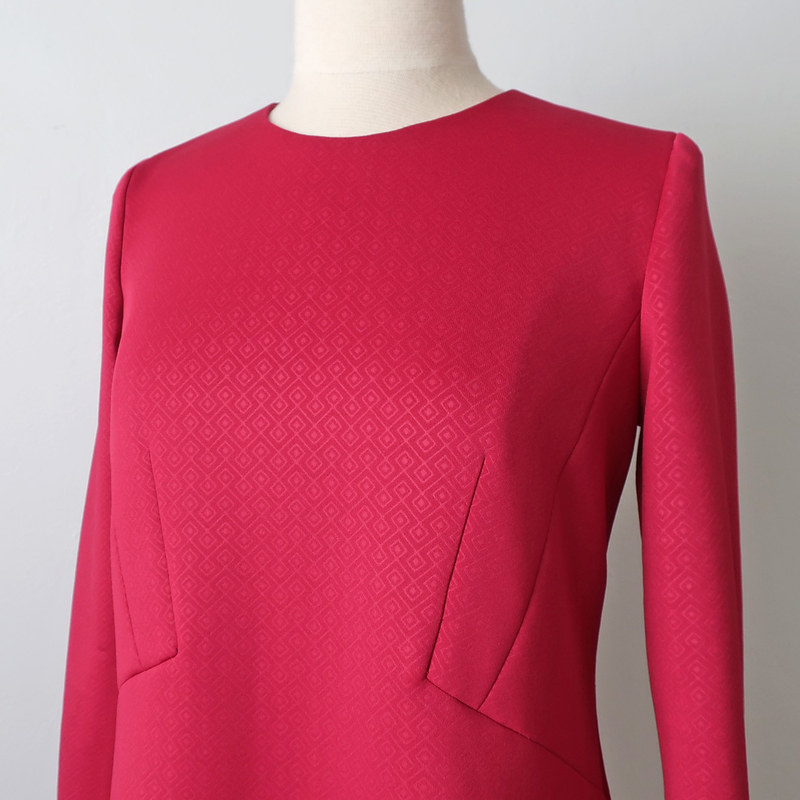
red ponte dress front close up on form

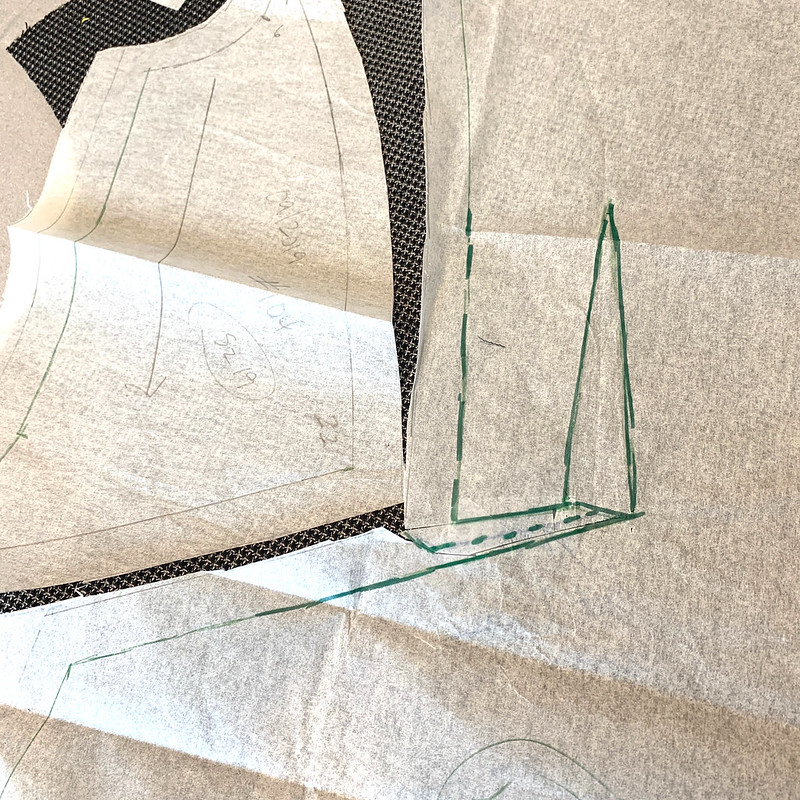
A closer look so you can see the print and also the seam plus dart details. This dress is quite simple to make, it went together very well once I figured out how to sew that darts/seam situation. Here's a look at that section of the front pattern piece plus the side inset.


Red dress dart detail

I couldn't figure out how the dart plus waist seam worked, and since I never look at the instructions I tried to puzzle through. However I thought perhaps they had some of their usual jumble of words describing how to sew - but no! a holiday miracle - there was a little diagram complete with scissors showing where to cut (on that dotted line) and then it worked perfectly. I guess I should follow my own advice sometimes and just read through in case :)


Red ponte dress 2

Here's something new to me - this dress was in Burda Petite sizes 17-21 which according to the measurement page in the magazine are the same as sizes 34-42 other than the height difference. (5'3" for petite and 5'6" for regular)  So not really any difference other than I didn't have to remove an extra  6 inches at the hem. Actually that was nice! I also have short arms so the sleeve was full length on me and as you can see in the magazine photo it is more a wrist length sleeve.


Sept 19 mod dress burda mag

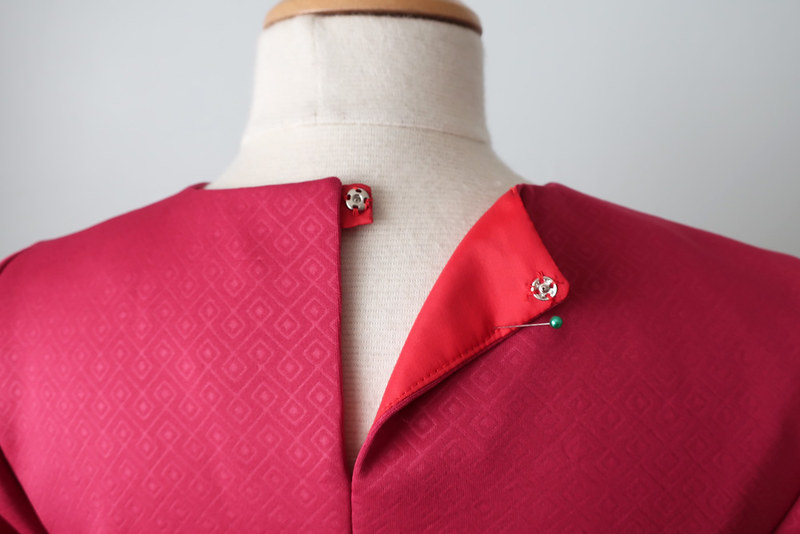
This type of fabric makes it super quick to sew, no seam finishes needed as it is a stable knit. I also decided that a zipper was not needed so I changed the back to a short opening with a snap.


red ponte dress back closure

I made a facing for the neckline and had it continue down about 5 inches so I could make the back neck opening.

red ponte dress side and back


red ponte dress back view


red ponte back view1

This dress also has darts at the elbow which is nice feature I guess - it does make the sleeve conform more to the arm and the sleeves are nice and narrow. So often I make jackets or dresses and the sleeves are way too wide for me all over the arm.  What do you think of my sneaky back neck closure? I don't like a button with loop, it's too fussy to make and to fasten. Or I'm just lazy :)


red ponte dress front on form

This dress would be fantastic in wool crepe or even a sweater knit. I think I might keep this in the active file - I can see making it sleeveless in a cotton sateen as a summer dress. Here I am contemplating summer sewing on the shortest day of the year. My words to live by - when winter is here then spring is on its way 🌞.

So that's the seasonal sewing accomplished. Up next I just cut out some pants in a wool, as I had fabric leftover when I made this jacket. No I don't really need a business-y suit like that but it seemed like a fun way to use the rest of that fabric and work on my pants fit. And warm pants are always nice to have in the wardrobe.

This won't be the last post of 2019, after finishing my shopping/wrapping/baking and the actual Christmas celebrating, I plan to do a big clean up of my sewing space (resolutions, right?) and get ready for a few sewing challenges in the new year.

Plus a look back at my sewing for 2019 with a bit of analysis plus some ideas for 2020.

red ponte dress 1

Time to run - those presents won't wrap themselves!

Merry Christmas to everyone 🎄🎄🎄

Beth

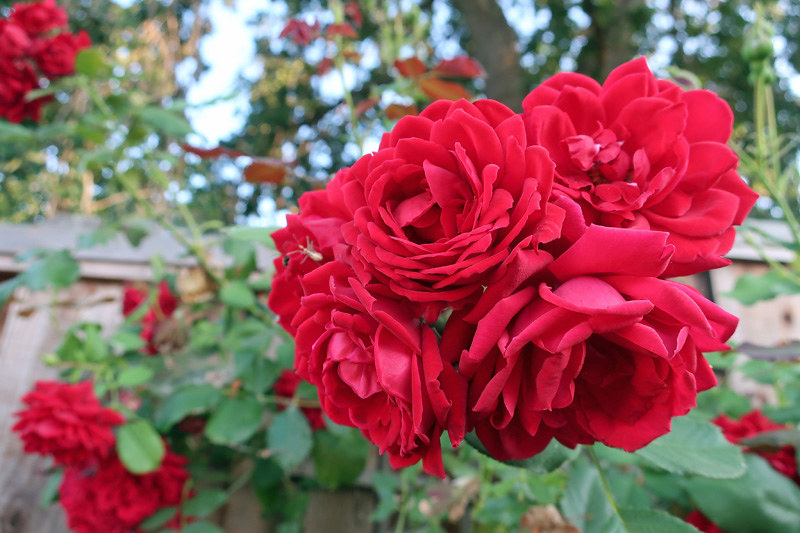
Today's garden photo, taken back in July and I wish I had some of these roses right now, I could make a perfect holiday table arrangement. But they are all gone and with just the rose hips left on the bush. This is a climbing rose that I put in to fill in the space after getting the fence replaced where the pink jasmine was looking a bit sparse. It has exceeded my expectations with masses of flowers all summer and I will be on the lookout for another one in January. 

red climbing rose

Sunday, December 15, 2019

Blazer Patterns comparison: McCalls, Closet Case, Vogue and Pauline Alice

It's that time of year when a sewing thoughts turn to outerwear, and this time I'm talking about blazer jackets. I've had a lot of comments and requests both here and on IG to talk about the various patterns and do a little compare and contrast. It's also time for me to restate my very common refrain - there are no new patterns! By this I always mean that most patterns are a combination of features found in fashion, the width of a lapel may change or in the case of a blazer, the size of the shoulder pad :). On the whole, a blazer jacket is fairly straightforward and it's up to you to choose the silhouette you like, the shape of the lapel, the type and placement of pockets, the seaming, the length and number of buttons. I find it entertaining to look at new patterns and see something quite similar in a pattern that might be 2, 5, or 15 years old. When you get to scrutinizing these patterns closely you can see that most of the differences in result have much more to do with the fabric choice and styling than the pattern. With that in mind I'm trying to highlight how they sew together in this post.

For this post I'll talk about 4 different blazer jacket patterns I've sewn and highlight some features of each pattern. In writing this post I tried to do a straightforward pros and cons of each but that wasn't working - certain things turn out to be both positive and negative. I'm including a slightly older (out of print) Vogue 2853 pattern as it is interesting to show the comparison with newer patterns, plus I've made it 3 times and it's a classic. The Jasika blazer from Closet Case patterns is a very similar jacket, and the pattern includes every pattern piece needed to create the shaping a blazer needs. For fitting purposes the McCalls 6172 has detail and instruction that is invaluable. The Pauline Alice Saler blazer is one I've made numerous times, with shoulder princess seams and is a good example of that style.

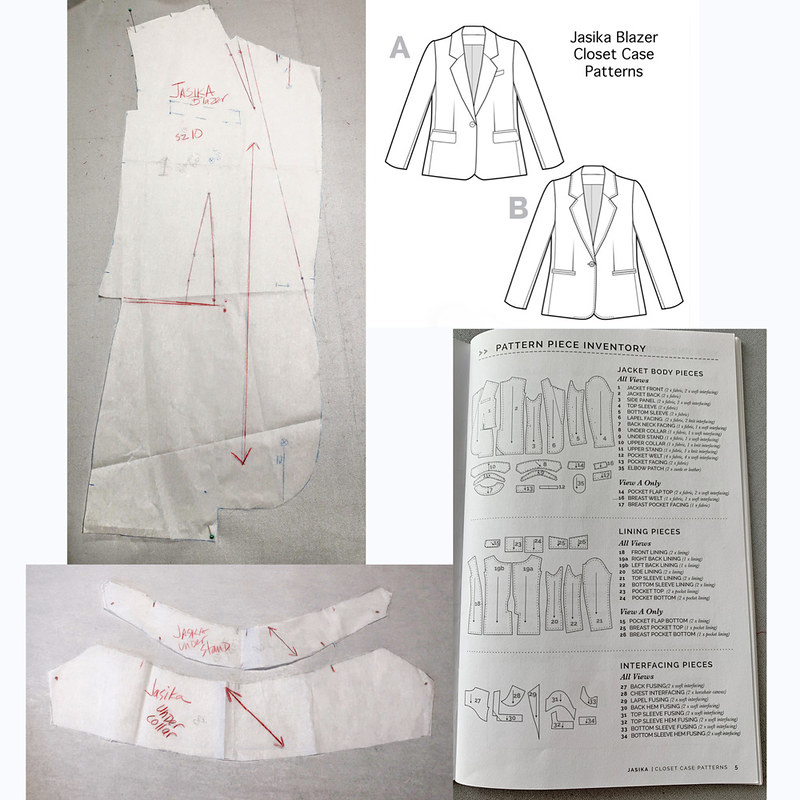
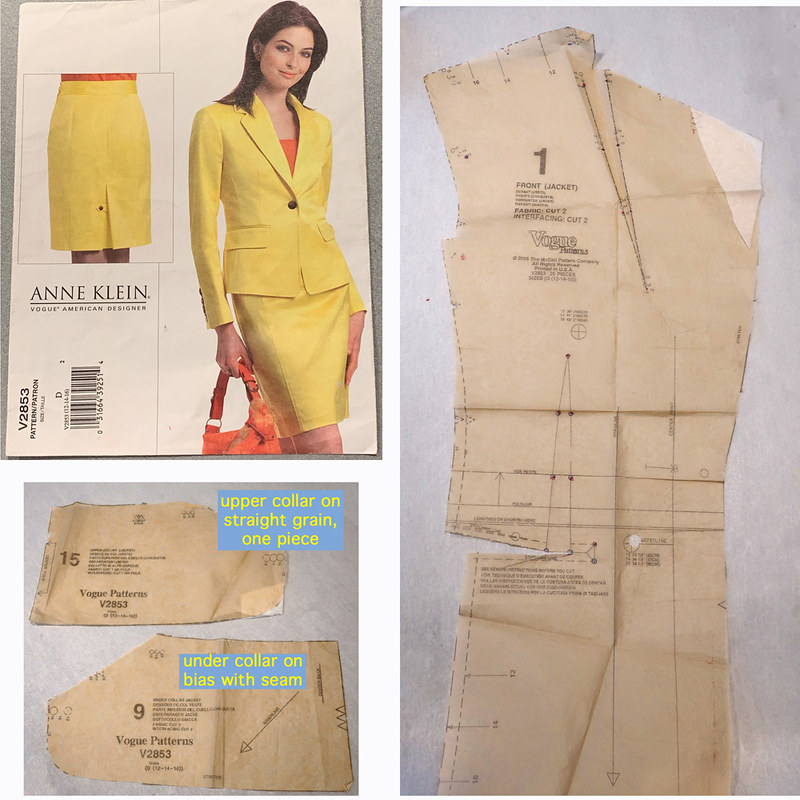
For each jacket I've included a few photo composites with the jacket front pattern piece (so you can see the shaping, lapel and pocket placement as well as the pattern envelope and then the collar pieces.
The front jacket piece really shows the style of the jacket, with the darting or seaming plus width of lapel and whether the pattern is marked well.


First up: Vogue 2853 Designer pattern


Vogue jacket combo

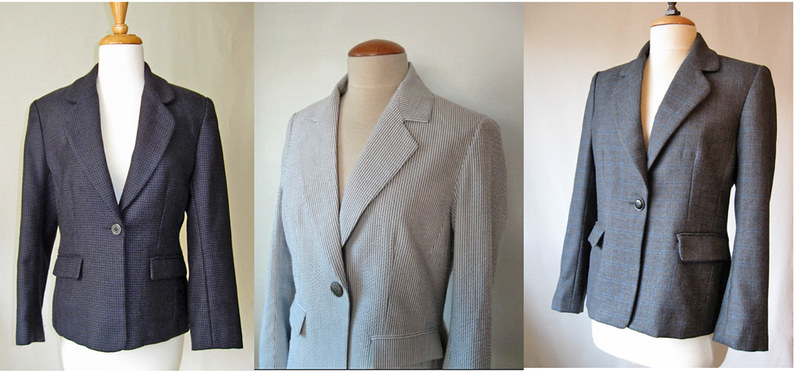
As I mentioned above, I've made this 3 times. Once you find a nice blazer pattern that fits you well I don't see the need for a lot of changing until the fashion changes drastically (change in lapel shape, more fitted, less or more shoulder shaping). This pattern has a copyright of 2005, here's the link to my most recent version. I did a multi-post series on making that blazer if you're interested in more sewing details.

LIKES
  • Pattern is fully marked, includes all notches, dots etc. so no guesswork. Seam allowance is consistent throughout at 5/8” (except for pocket welts)
  • Separate pieces for upper and under collars, and under collar is cut on the bias with a seam at center back (so sides of under collar are mirror images, good for plaid or stripes)
  • Two-piece sleeve, marked with shaping ease at elbow and it fits perfectly into armhole with no extra ease
DISLIKES
  • Roll line on collar and lapel are not marked, would be nice if marked
  • Rounded corners on collar and lapel, these days I prefer squared off corners but you can see in the photo that is easy to change
  • No side seam. I realize this is the style but with a side seam you can make small fit adjustments quite easily, since this has a front, back and a side panel the fit adjustments are a bit more work
  • Dart under lapel, is both a plus and minus, as it adds shaping, matches up and sews well. It's just not my preference as that dart adds bulk in the collar seam. (note same dart on Jasika below)

Vogue 3 jackets 

Overall Impression: I started with the pattern to show a baseline - and to show how most blazer patterns are more similar to each other than different. This pattern is really well made, and sews together nicely. 


Pauline Alice Saler Jacket Pattern

Saler jacket composite

LIKES
  • Pattern is sufficiently marked, not as much as the Vogue pattern but easy to follow
  • Shoulder princess seams which make it  easy to adjust for fit, both before cutting out and then if need be as you sew separate pieces. Also I find shoulder princess seams quite simple to sew 
  • Side seam - another place for fit adjustment 
  • Separate pattern pieces for upper and under collars, and under collar is cut on the bias with a seam at center back (so sides of under collar are mirror images, good for plaid or stripes)
  • Sleeves sew in perfectly with no excess ease. Two piece sleeve.
  • Includes separate interfacing pattern pieces for sleeve heads, hemline and for front lapel (which indicates lapel roll line, yay!)
DISLIKES
  • I found the pocket placement on this to be too high, which just could be personal preference, and I lowered it a bit. 
  • Collar is a two piece collar, with a separate collar stand, the same pattern piece for both upper and lower collar. It comes out fine but I don’t think this adds a lot to the pattern and makes for more seams and bulk in the collar area.
grey saler jacket 1

Overall Impression: I obviously like this pattern as I’ve made it 3 times in the last few years. Once you get a blazer pattern that fits well it’s so easy to keep making the same pattern! It fits me well across the shoulders so that’s a bonus. Also the lapel/collar looks right to my eye, once you start looking at blazer patterns you can spot the small differences in the angle of the collar/lapel, the amount of lapel etc and start to figure out your preferences. I have to give a caution on this one, as I originally made a test version and then changed the length, and maybe the pocket placement. So if yu try this pattern I suggest a test version. Here's the post for the one in the photo above.


Jasika Blazer from Closet Case Patterns


CC jasika composite 2


This is a pattern which has encouraged a lot of people to stretch their sewing skills and make a tailored jacket. It includes every possible pattern piece and is very thorough in the steps required. I made one version as a prelude to my tailored jacket class last fall since a lot of people came to that class after seeing completed versions of this online.
CC Jas blazer composite

I made the outer part (not the lining) including all the steps for the collar and lapel structure as I wanted to familiarize myself with it.

LIKES
  • Pattern is fully marked with notches and dots that match up well
  • Includes interfacing pattern pieces for every part of the jacket such as sleeve heads, collar and lapel shaping, hemline and vents
  • Pocket placement is good
  • Includes center back vent with interfacing and lining construction indicated
  • Roll line on lapel is fully marked (yay again)
  • Separate pattern piece for upper and under collar - with a caveat, see below

DISLIKES
  • Collar pattern pieces -  the under collar is cut on the bias (as it should be) but is one piece. I prefer the under collar to have a seam and thus the sides of the under collar are mirror images of each other
  • The dart under the lapel gave me trouble in sewing, it’s quite small and doesn’t add a lot of shaping. Most people in my classes  had trouble getting that corner of the jacket front to behave.
  • Seam allowance variation - the pattern has 5/8” seam allowances in most of the jacket however in some of the collar lapel seam allowances it changes to a 3/8” which means you have to pay great attention when sewing. Also you then have to trim some seam allowances down to 1/4” which means trimming away just 1/8”  - not fun! I really disliked this and feel that it would be simpler to sew if all seam allowances were the same and then I can trim and grade as needed for the fabric. 
  • Welt pocket and front vertical dart - this also was a bit fussy, if you look at the Vogue jacket it has a similar dart going into the pocket slash and is angled so that when the dart is sewn it returns to flat. This pattern has a large dart but the slash is straight so I found the pocket welt opening didn’t lay as flat as would be optimal.
Here's a look at the instruction sheet where the seam allowance changes around the collar/lapel area. You can see my notes about the seam allowances. I also found that in some places the instructions were very specific on things that I don't prioritize and omitted things I tend to think are important but that is just personal preference. I

CC jasika lapel instruction page


Overall impression: traditional blazer styling and shape with every pattern piece spelled out and every step detailed. It's a fun option that the elbow patch option is included. The shape is kind of boxy and the sleeves are quite slim so I think a muslin for fit is probably necessary for a lot of people. I really disliked the pocket instructions and you would be better served to learn how to do a welt pocket and then just use the pocket placement to create the pockets. Not a fan of the variation in seam allowance in the collar. I am definitely not the target market for this pattern,  note that I rarely look at the instructions and typically do all the interfacings as I go with the jacket shell pattern pieces as a guide.

McCalls 6172 Jacket by Palmer and Pletsch

I've made two versions of this pattern for my friend Heather. The first was a navy blue lightweight wool that was a trial run prior to making this version below in Shetland wool from Britex. 

H blazer front view2

By the way, on my Instagram profile there is a highlight "wool jacket" which has every step in making this jacket if you want to see sewing in action.

Revise jacket front McCall blazer

McCalls pattern collar

LIKES
  • Markings for fit adjustments such as FBA, swayback etc are printed on the pattern pieces so doing fit adjustments on the pattern work beautifully. (See above photo)
  • Two-piece sleeves are well marked, with notches, dots etc and fit into armhole with no issues
  • Pocket placement is good.
  • Separate upper and under collar pieces, the under collar is cut on bias and seamed at center back
  • ROLL LINE is marked on under collar and jacket front. again, Yay!
  • Pattern includes options for different length jackets and welt or patch pockets
  • while it is possibly out-of-print, you can find copies available and it does come in a full range of sizes (McCalls size 8 - 22)
  • The collar and lapel sewing instructions seem very clear and include some good tips to avoid bulk and pressing mistakes
DISLIKES
  • The instructions and pattern pieces for the welt pockets are really lengthy and while they say are "no fail" (?) I found them quite confusing and add too many steps. 
  • Not really a dislike but notable, there are no side seams, the jacket has a front, side panel and center back seam with no back vent. The center back vent is a nice detail that is on the Jasika however the back has to fit perfectly or the vent will spread open and not look great. 

McCalls 6172 envelope and blue jacket


All these patterns have pluses and minuses but I think by showing the jacket front piece and the collar pieces you can see that there are more similarities among them then drastic differences. So much of what makes a sewing pattern popular is the styling, fabric choice and the internet likes but if you examine the technical drawings there aren't that many differences. If you like a particular style of instructions such as a booklet then the indie pattern will be for you. If you are accustomed to the standardized instruction sheet and diagrams then the McVoguerick patterns will probably serve you better.

I had to choose a winner among these patterns it would be the McCalls pattern. There are similar details on all these patterns but the McCalls is a step ahead with the fitting instructions printed on the pattern that are really easy to follow. The collar/lapel sewing instruction is very clear and uncluttered and has a lots details and tips (such as how to avoid that scoop in the lapel notch) that are extra helpful.

There are few of my thoughts on blazer patterns. My big takeaway is that you should look at the technical drawings and see how very similar most of them are. If you are accustomed to a particular type of instruction then you will probably have success with that brand's pattern.
Or you can take a class with me 😊. My next jacket class at Hello Stitch is fully booked but we might schedule again in late spring - you can always request and we will try to put specific classes on the calendar.
Yesterday was my last class for the year and in the words of the holiday poem, I'm ready for a long winter's nap!!! Seriously - it's time to relax, watch some movies and just do a lot of nothing for a little bit.

Up next, I have so many finished items that I want to post however the weather and my schedule has precluded taking photos. We have sunshine coming up this week for a few days so I hope to get outside and get that done. Also I may have had a little binge of fabric ordering over the weekend with some wools and silks so I predict more jackets and silk blouses in my future. And jeans. SO many ideas....

I would love to hear if you have a favorite blazer pattern or even one that didn't work - it's all informative.

Happy Sewing,
Beth

The garden is very bleak this time of year and one of the few things still flowering is the hardy geranium - a lovely spot of color in this grey time of year.

Untitled